SHARE


 Palestine
18-12-2025 | di COOPI
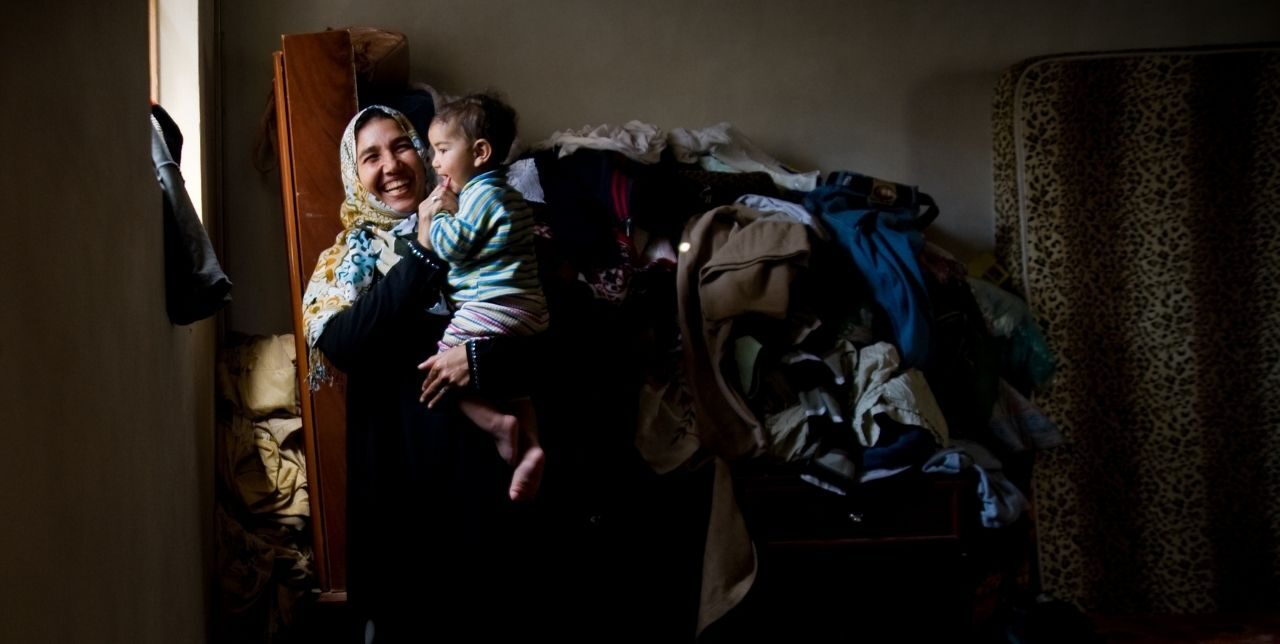
Born in Gaza
COOPI’s commitment in Gaza continues, in one of the most complex and dramatic humanitarian contexts in the world today.
Widespread destruction of civilian infrastructure, the collapse of the health system, and mass displacement have made access to basic healthcare increasingly difficult, especially for women, children, and vulnerable people. In this scenario, ensuring essential health services does not only mean intervening on facilities, but also strengthening the capacity of local communities to respond to the emergency.
Through the "Help Gaza" project, COOPI works alongside reliable local organizations to support emergency healthcare interventions, first aid, and psychosocial support, with a particular focus on training women and young community health workers. The goal is to bring life-saving skills directly into shelters, schools converted into reception centers, and areas where hospitals and clinics are no longer functioning.
It is within this framework of concrete cooperation and daily resilience that the story of Halima unfolds—a young woman trained as an emergency midwife, able to transform the training she received into a decisive act of care, where everything seems to be lacking.
Halima’s story
Halima (a fictional name) is twenty-eight years old and was born in Khan Younis, in the southern Gaza Strip. Before the war, she was studying to become a doctor, but the university was first closed and then destroyed. When she learns that COOPI – Cooperazione Internazionale, together with several local partners present and operational in Gaza, is organizing emergency training for midwives, she decides to enroll. She does not know whether she will ever return to a real hospital; she does know, however, that women continue to give birth, even under the bombs.
The training lasts one week, in one of the few remaining buildings, adapted into a learning center. Halima learns how to assist a normal delivery in extreme contexts, how to recognize danger signs, and how to intervene without electricity, without running water, using only essential tools. She deepens her knowledge of the Kangaroo Method—skin-to-skin contact that can keep premature or hypothermic newborns alive when incubators and medicines are not available. She takes part in practical exercises and simulations and reviews emergency protocols designed for shelters and tents. For the first time since the war began, she feels that, despite everything, she can be useful.
A few weeks later, that training becomes reality. It is night when a displaced woman arrives at the improvised clinic-tent set up in a school. Labor is advanced, and the nearest hospital cannot be reached. Halima immediately recognizes the situation: the delivery will be quick, but complicated by exhaustion and malnutrition. She puts into practice what she has learned: she organizes the space, speaks to the mother in a calm, steady voice, and guides her breathing. When the baby is born, he is small and cold. Without hesitation, Halima applies the Kangaroo Method, just as she did during the training. She wraps mother and child in a blanket, keeps them skin to skin, and monitors breathing, color, and warmth. The cry comes after a few seconds that feel endless.
In the days that follow, Halima continues to move among tents, schools, and shelters. She is not alone: like her, other trained women begin offering assistance to thousands of internally displaced people, bringing basic healthcare skills into a health system that is by now virtually nonexistent. The trained midwives do not only provide support during childbirth; they explain, reassure, and restore a fragment of dignity at a moment when everything seems lost.
In the accounts of those who endure among the rubble of Gaza, the work of organizations such as COOPI intertwines with stories like Halima’s: support for communities, strengthening of local capacities, and a constant presence alongside the most vulnerable people. Not heroic gestures, but concrete, quiet actions that allow life to continue even when the context seems to deny it.
Halima does not know what her future will hold. She does know, however, that the training gave her something the war has not managed to take away: the ability to save lives, one at a time, and the certainty that even in the darkest darkness, someone can still be born—and survive.
Cover photo: ph. Alessandro Gandolfi for COOPI