SHARE


 Palestine
23-04-2026 | di COOPI
Help Gaza. Where fear turns into courage, a network of young first responders emerges
Knowing how to act in an emergency is not something to be taken for granted. In Gaza, where it can make a difference every day, more and more young people are choosing to learn. For this reason, since October 2025, COOPI - Cooperazione Internazionale ETS has been supporting the “HELP GAZA: emergency support through health and psyco-social activities for population in Gaza” project, implemented by its partner Education for Employment – Palestine (EFE-Palestine).
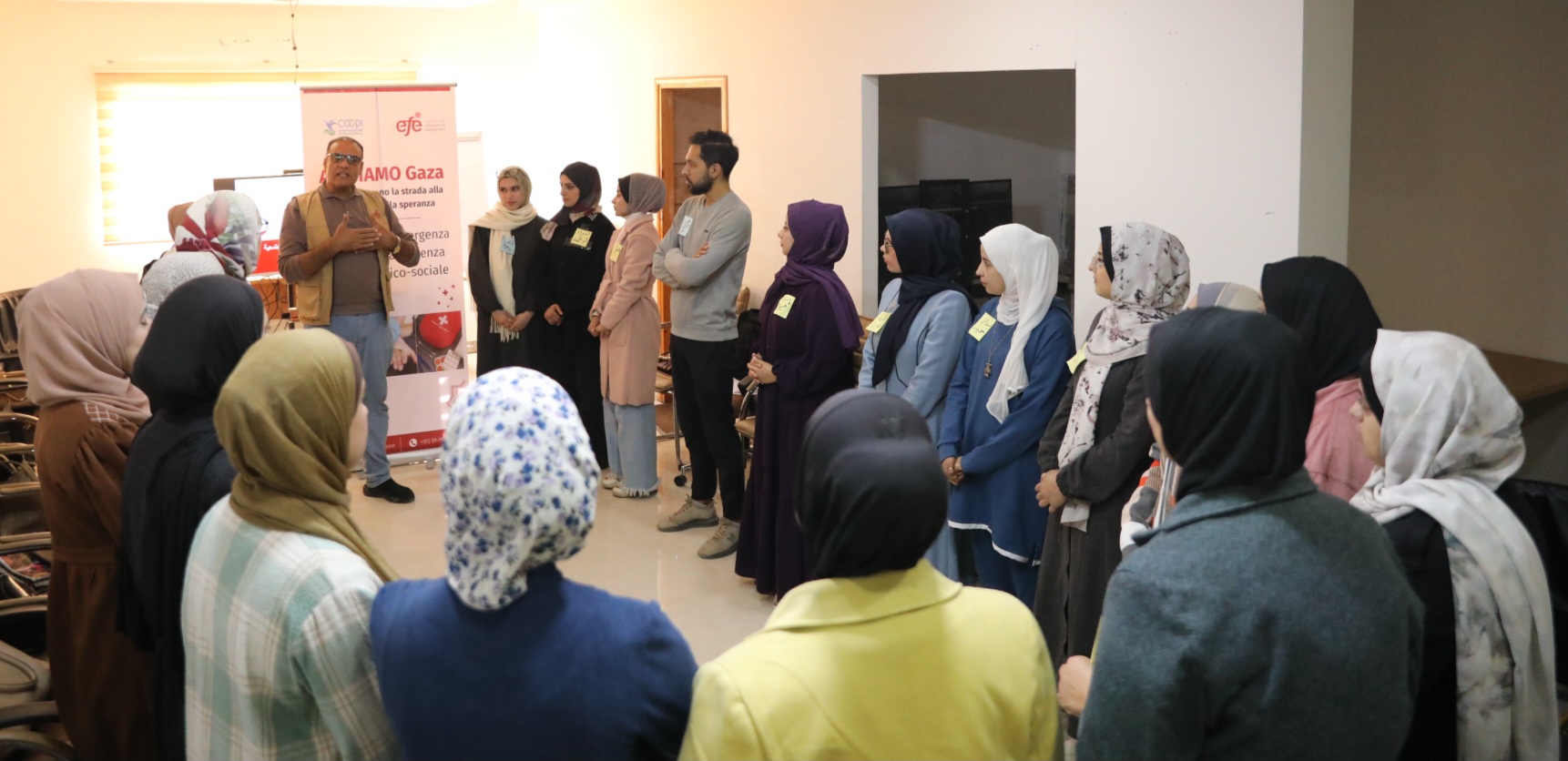
The project is now fully operational. At Al Wafaa Hospital in Gaza City, the first training course in emergency first aid and psychosocial support has just concluded. Thirty-one young people — 4 men and 27 women — have successfully completed the course and are now a point of reference for their families, neighbours and friends.
Responding to emergencies
What has maily characterised the group is their motivation to serve the community, often arising from deeply personal experiences.
Amina*, 23 years old, decided to enroll in the course after a night she cannot forget. During a bombing in her neighbourhood, an elderly neighbour was injured and, with no immediate help available, nobody knew how to assist her: how to stop the bleeding, how to calm her, how to support her while waiting for emergency services. Amina was there, but she felt paralysed, unable to do anything concrete.
That night I understood what it means not to know how to help. I felt useless. I decided to join because I want to be prepared, for my family and for those around me. Here we can’t afford to wait for someone else: we have to be the first to act. Knowing how to help others is a responsibility.
From theory to practice
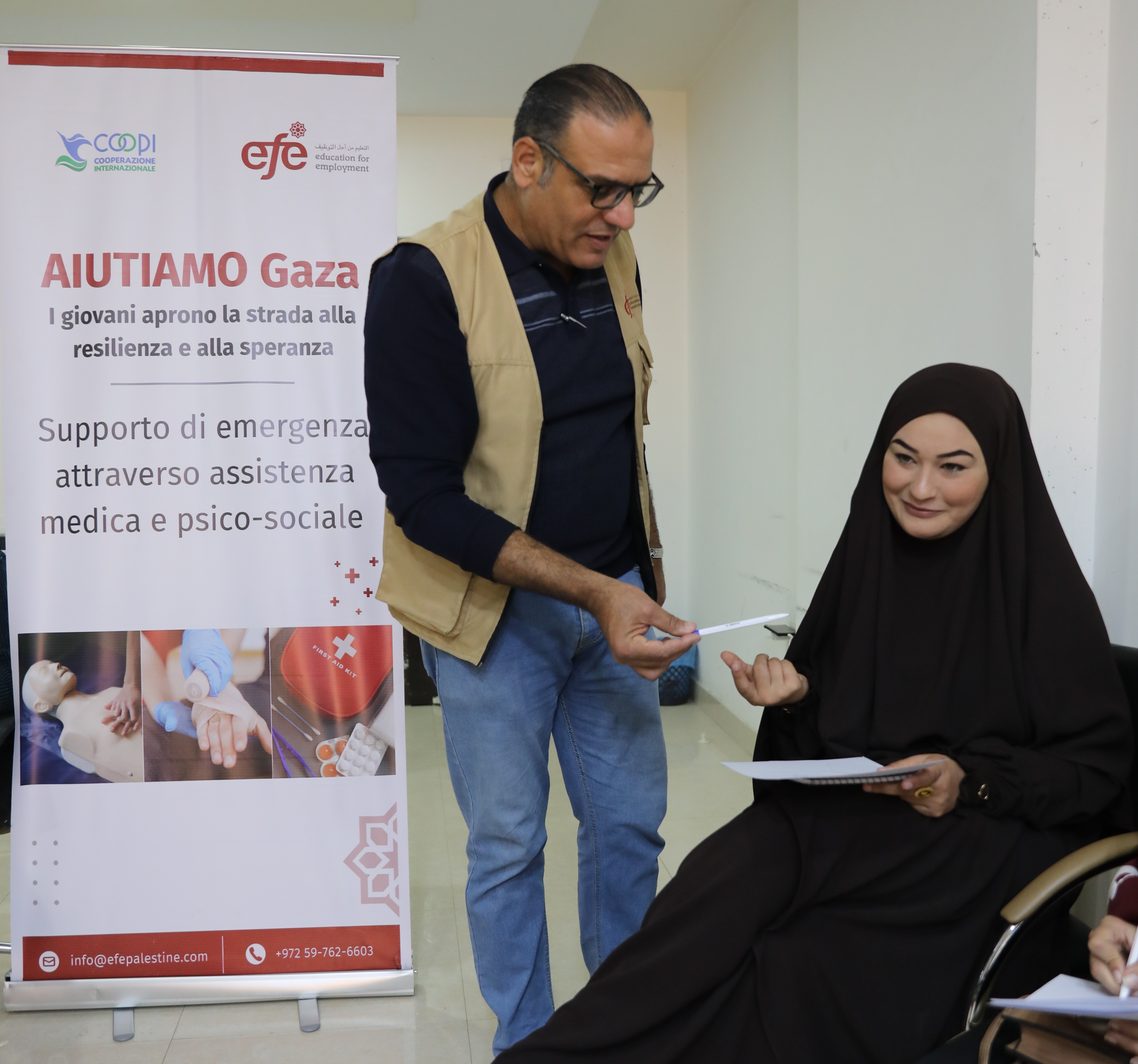
The training focused on both emergency first aid and psychosocial support, equipping participants with the essential knowledge and practical skills to act as first responders in their communities.
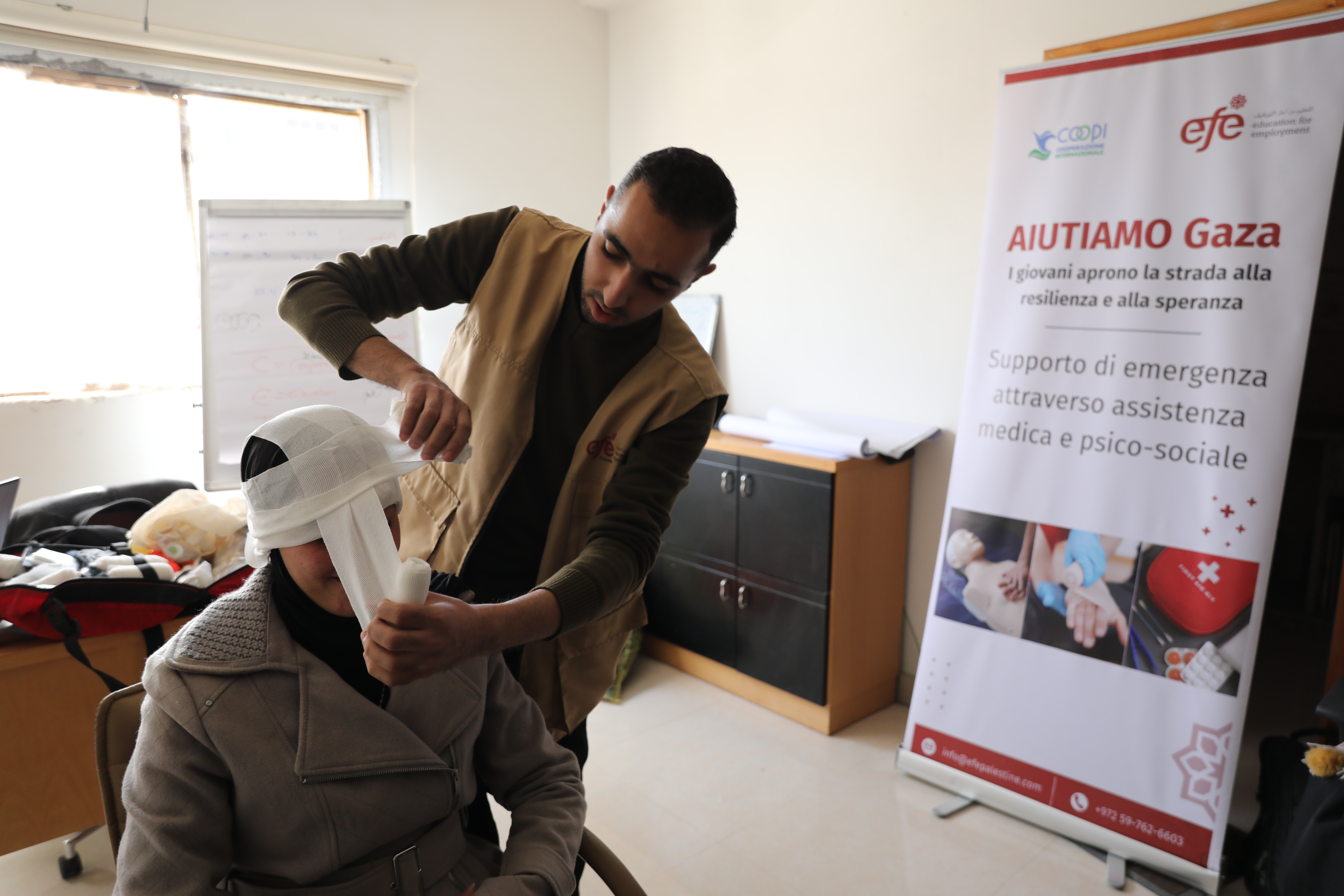
The approach was highly practical, closely reflecting the reality these young people face every day. Expert trainers demonstrated techniques for bandaging, treating and dressing wounds, as well as managing bleeding – essential skills for intervening in the crucial first few minutes.
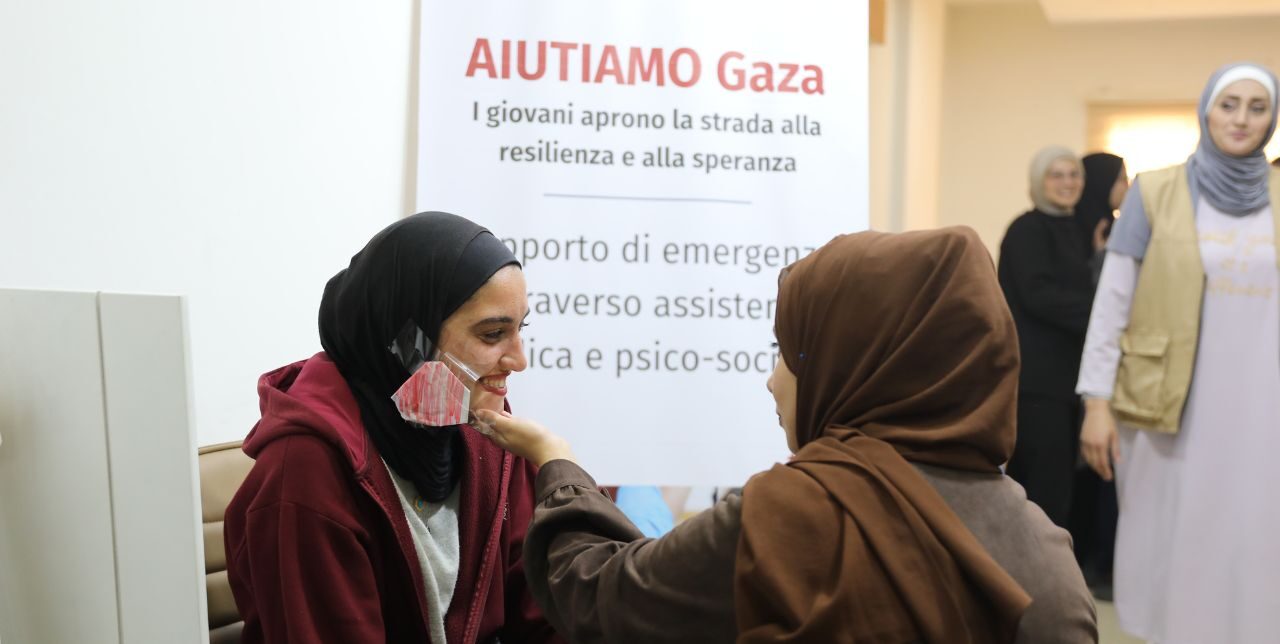
At the same time, special attention was given to psychosocial support, because in Gaza the wounds are not only physical but also emotional. For this reason, knowing how to listen, reassure support others is an integral part of helping.
Thanks to the distribution of professional medical kits, these young people are already turning what they learned into practice. Their autonomy, responsiveness and confidence in their own abilities are growing.
For Yousef*, 27, the value of the training lies precisely everyday applicability:
Before, I would have hesitated, I would have been afraid of making mistakes. Now, when something happens, I take action; I know where to start. And knowing that, in that moment, I can make a difference for someone is priceless.
A network that multiplies skills
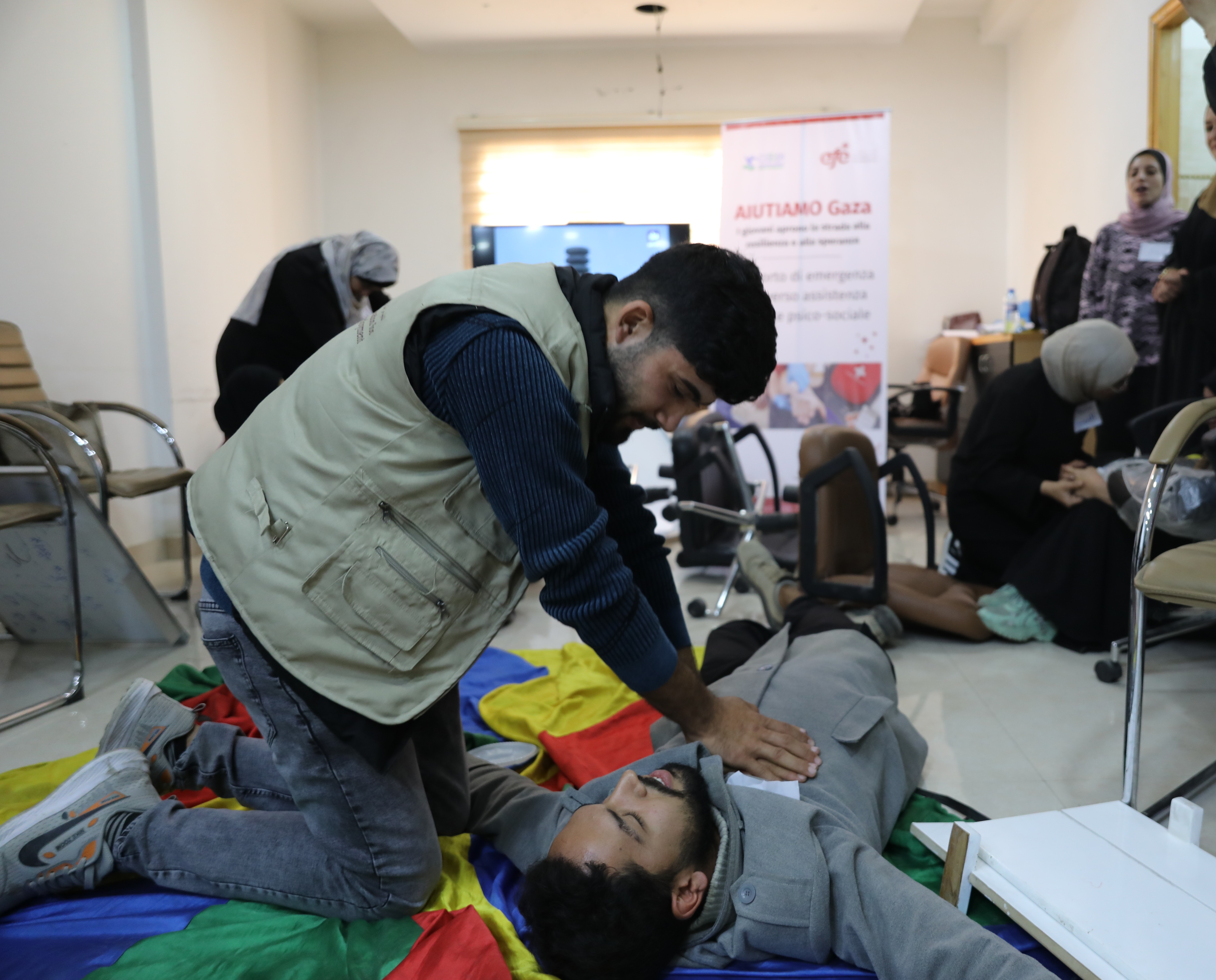
From the very first month following the training, participants began putting their acquired skills into practice: they share knowledge, offer psychosocial support and prepare for structured interventions in the local area.
COOPI, together with its local partner EFE-Palestine, supports these young people even after their training, encouraging their ongoing involvement in community initiatives. The participants are now actively engaged in identifying local needs and defining intervention strategies, in a gradual process that takes them from training to action in the field.
Rania*, 25, is among those who turned training into a daily act of sharing: after the course, she began meeting with families in her neighbourhood, explaining how to respond in emergencies and how to support one another in times of difficulty.
When I get home and they ask me what I’ve learnt, I can’t keep it to myself. We sit together, we talk, we practise the movements. I see the fear in people’s eyes, but also the relief when they understand what to do. I can’t change what happens, but I can make sure that no one feels completely helpless anymore.
The impact is tangible: thousands of people have been reached indirectly, and over a thousand direct beneficiaries have received practical knowledge and support. Thirty of the 31 graduates reported reaching 6,159 indirect beneficiaries through awareness-raising activities and community engagement, and providing direct support – including first aid guidance and psychosocial support techniques – to 1,207 people.
The enthusiasm of the participants and the effectiveness of this first cycle have led to the launch of a new round of training, further expanding the network of young first responders. And with it, the communities’ capacity to react and support one another is also growing, consolidating a replicable model of intervention.
In a context where everything can change in an instant, knowing what to do becomes an act of care and shared courage.
* fictitious name