SHARE


 Chad
Chad
01-06-2026 | di COOPI
Chad. Fewer conflicts over resources and higher incomes for 4,500 people in Moyen-Chari
On 25 May 2026, the town of Sarh, in the Moyen-Chari region of Chad, hosted the official launch ceremony of the project “FAIRE – land rights, agroecology, inclusion, resilience and empowerment in the Moyen-Chari region”, implemented by COOPI – Cooperazione Internazionale in collaboration with the Chadian NGO RAPS-Développement, with funding from Italian Cooperation.
The ceremony was opened by the deputy mayor of Sarh and featured speeches by the COOPI project manager and the department’s secretary-general, representing the government delegate. The latter emphasised that the project’s objectives are fully in line with Chad’s National Development Strategy, urging all local institutions to support the initiative. The plenary session saw full participation from those present, so much so that the ceremony, initially scheduled to last three hours, went on for a full five hours — a clear sign of the commitment and interest the project has generated within local communities.
In the Moyen-Chari, land is not merely a resource: it is at the heart of a daily competition between farmers and herders that determines food security, income and social cohesion. Increasingly erratic rainfall, recurrent droughts and soil degradation are reducing the availability of water and pasture, whilst the expansion of agriculture is often encroaching on traditional transhumance routes. It is precisely this divide that the project addresses through an integrated approach, combining three levers that are inseparable in the local context: land governance, agroecology and market access.
Areas of intervention
The initiative will be implemented in the municipalities of Sarh and Balimba and will directly involve 4,545 people. Over a period of 36 months, COOPI will contribute to strengthening local committees and promoting dialogue among farmers, herders, and traditional and local authorities, in order to foster shared management of natural resources and prevent conflicts related to land use.
At the same time, through Farmer Field Schools and practical training pathways, communities will be supported in adopting sustainable techniques such as composting, crop rotation, agroforestry, and rehabilitation of water points, with the aim of improving agricultural productivity and resilience to the increasingly frequent effects of climate change.
Finally, FAIRE also addresses the economic dimension by supporting the sesame and beekeeping value chains to increase household incomes and create long-term economic opportunities. Activities include support to cooperatives, product processing, market access, and financial literacy pathways, especially for women and young people.
Women’s empowerment
Within this framework, women’s empowerment is a strategic pillar of the intervention.
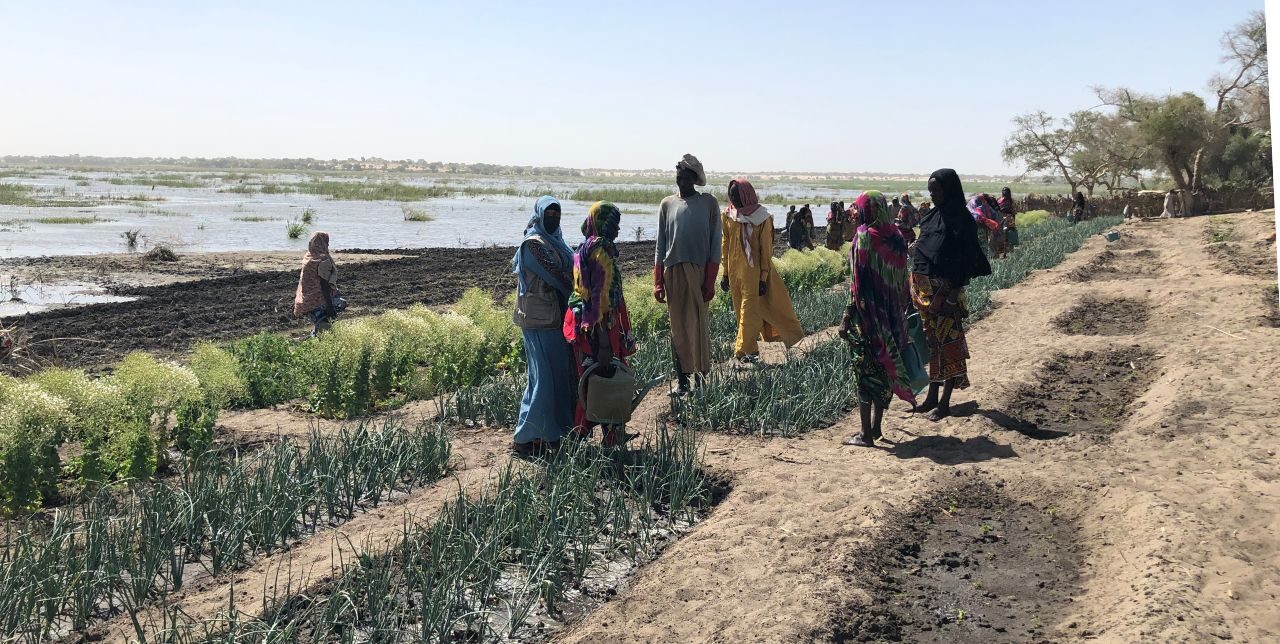
In the rural communities of Moyen-Chari, although women represent one of the main labor forces in agriculture and food processing, they remain largely excluded from direct access to land and from decision-making processes: the use of land often depends on husbands, fathers, or traditional leaders, and their participation in decisions regarding production and income is very limited. Yet the workload is enormous, as women regularly carry out agricultural, domestic, and product-processing activities, with working days that can exceed 14 hours. The FAIRE project seeks to reverse this imbalance through training, access to credit, and above all greater involvement in economic and community decision-making processes for more than 2,000 women.
A response to the growing conflict over resources
The ultimate objective is therefore ambitious yet concrete: to reduce pressure on natural resources, increase household incomes, and rebuild shared rules for coexistence among communities that are currently competing for survival. It is an attempt to transform a territory marked by conflict over resources into a more balanced system, where land, water, and labor once again become factors of stability rather than tension.
Despite the challenges, Moyen-Chari has significant agricultural potential: if properly managed, soil fertility can support more resilient production systems and greater integration of small-scale producers into markets.
The project is part of the "FASENDA initiative – Promoting the socio-economic empowerment of young people and women in sustainable agroforestry-pastoral value chains in Chad", supported by the Italian Cooperation to foster the resilient development of agro-sylvo-pastoral systems in the provinces of Ouaddaï, Dar Sila, Salamat, and Moyen-Chari.
---
COOPI has been present in Chad since 1976, where it has implemented 160 projects to date, reaching more than 4.5 million people through a multisectoral approach. In the Lake Province, it improves food and nutrition security, promotes women’s empowerment, and supports conflict prevention. In the provinces of Sila and N'Djamena, it provides education to displaced children, offers psychosocial support to trauma victims, and promotes peacebuilding.