SHARE


 Mauritania
21-04-2026 | di COOPI
Mauritania. Half-moons to fight desertification in Hodh El Chargui
Mauritania is a predominantly desert country, with only 0.5% of its land considered arable. The effects of climate change are particularly evident in the southeastern regions, including Hodh El Chargui.
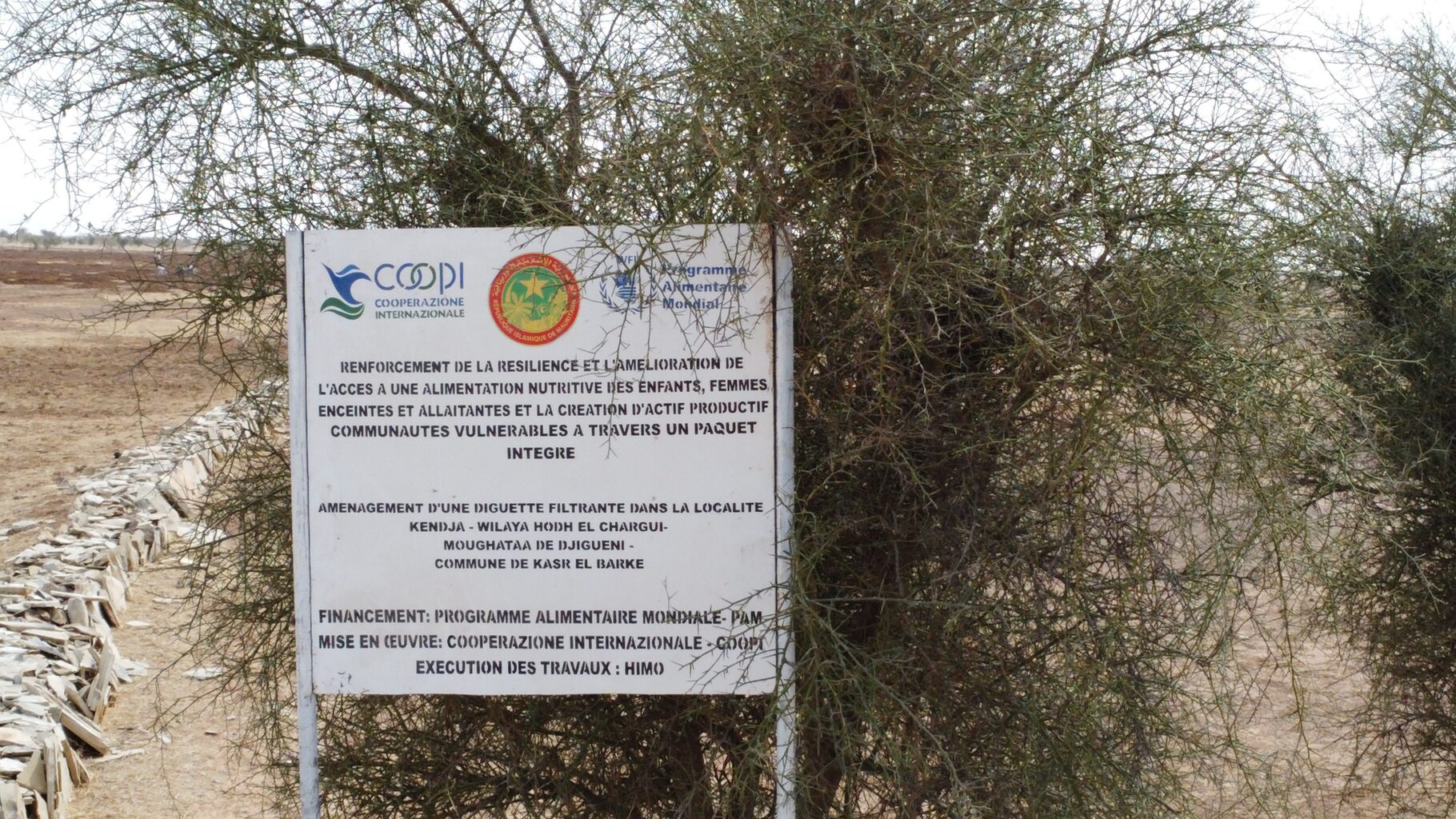
In this fragile context, marked by irregular rainfall, rising temperatures, and soil degradation, COOPI – Cooperazione Internazionale ETS intervenes to strengthen the food and nutritional security of vulnerable communities, thanks to funding from the World Food Programme. The project “Building resilience and improving access to nutritious food for children, pregnant women and breastfeeding mothers in vulnerable communities through an integrated package”, active since June 2024, aims to enhance the resilience of vulnerable communities against food and nutritional insecurity by mitigating risks linked to climate change.
Among its main objectives, COOPI works to support agro-pastoral production potential, improve natural resource management, and strengthen local capacities and knowledge.
Retaining water, nourishing the soil
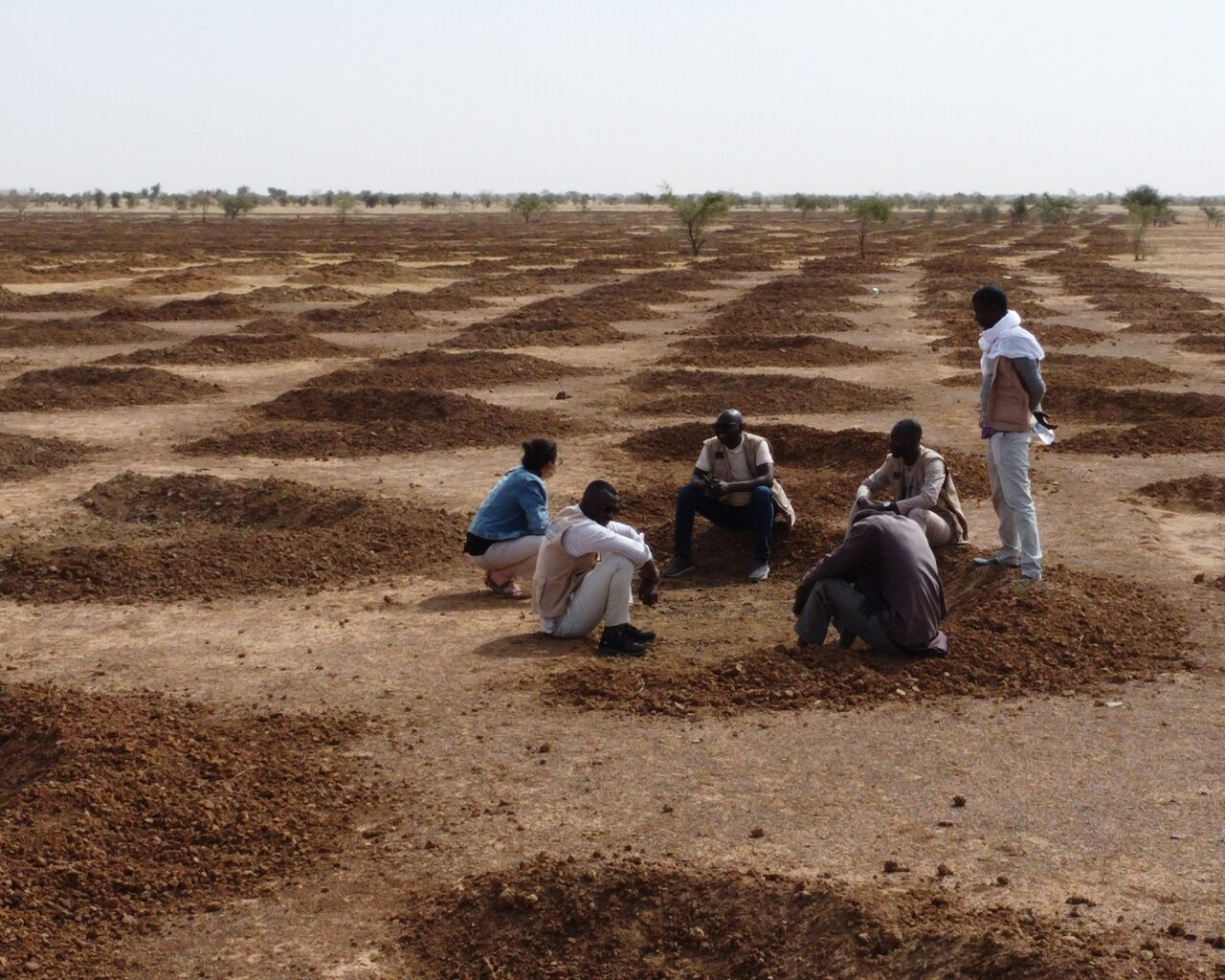
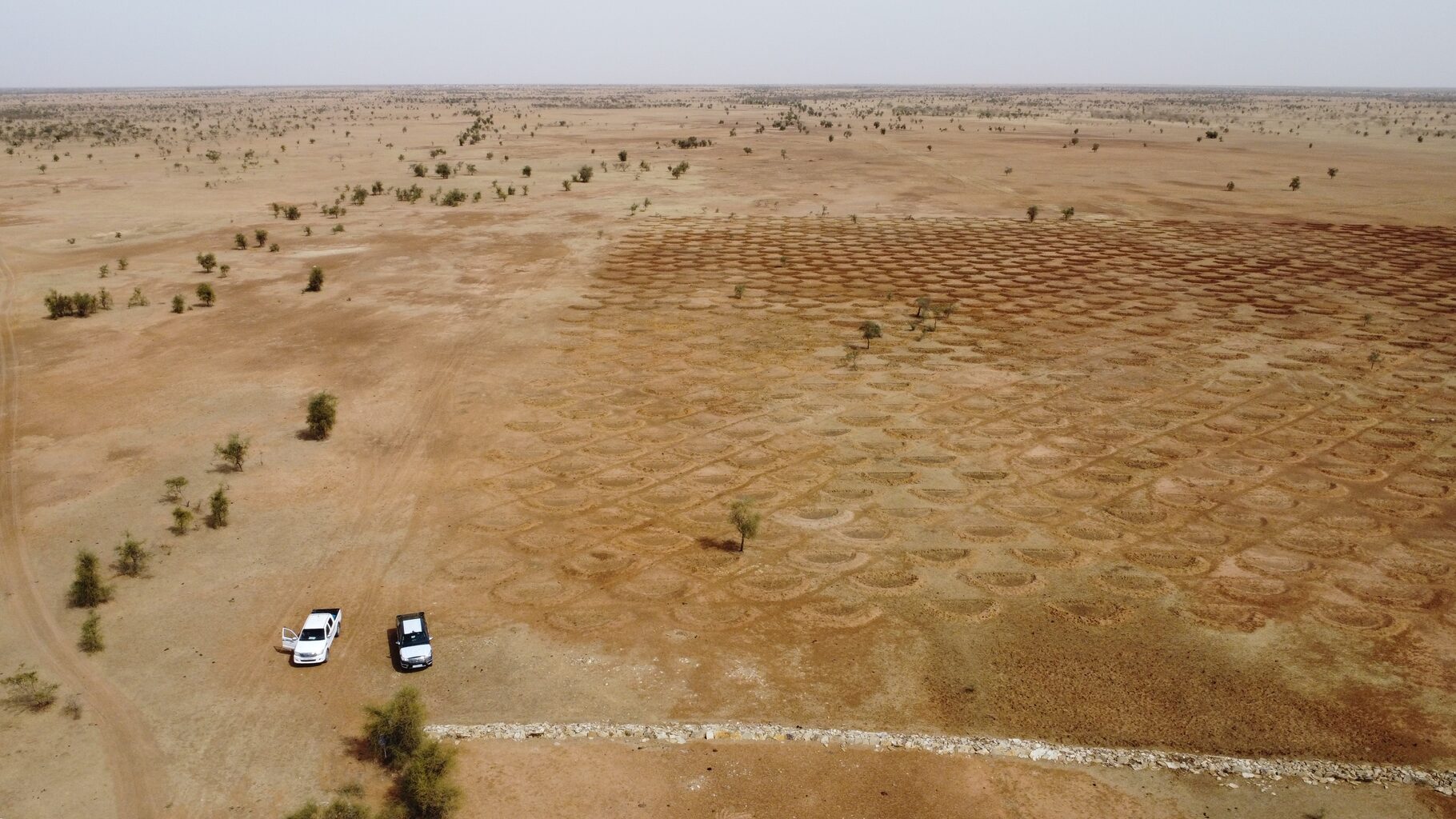
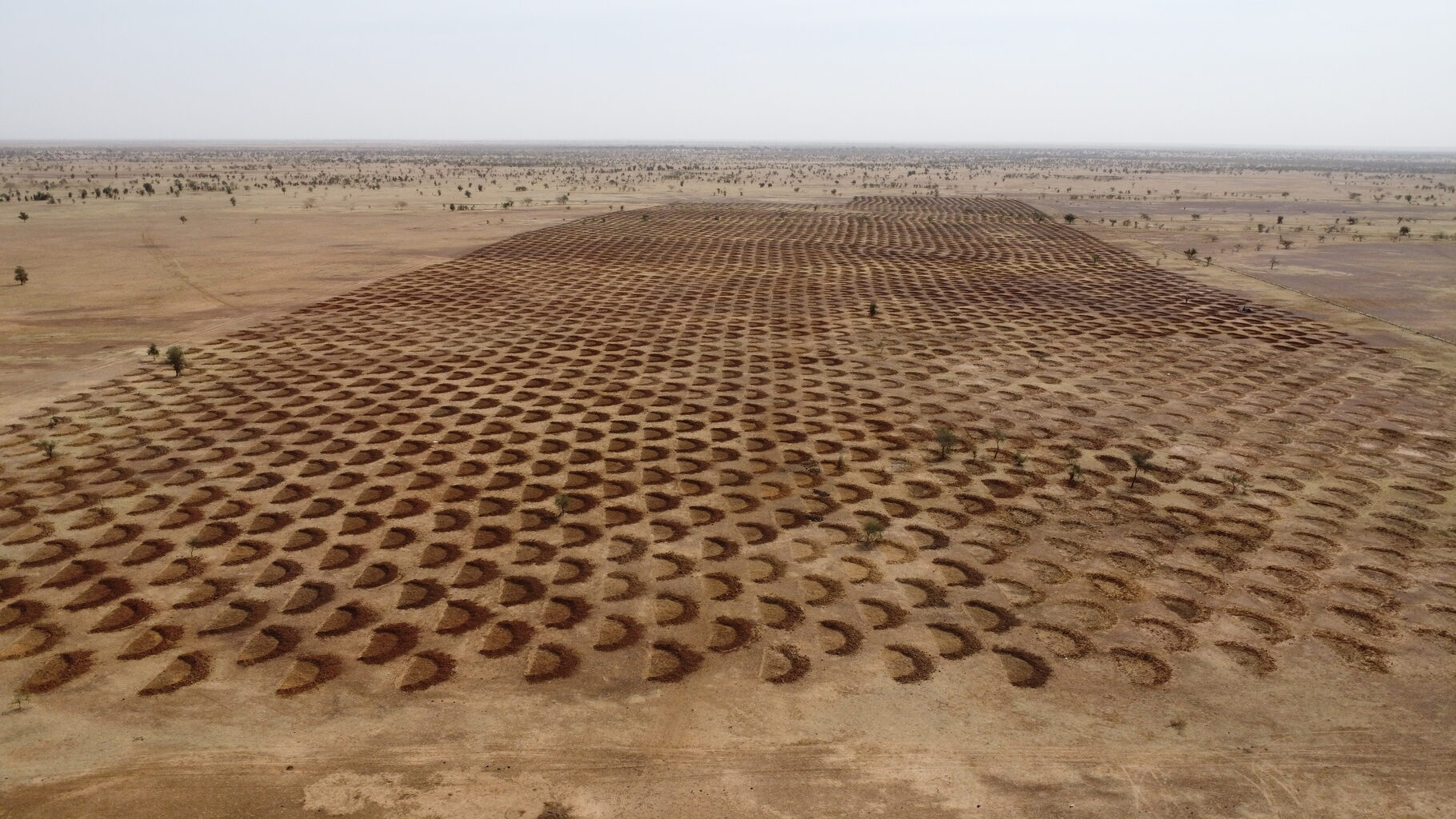
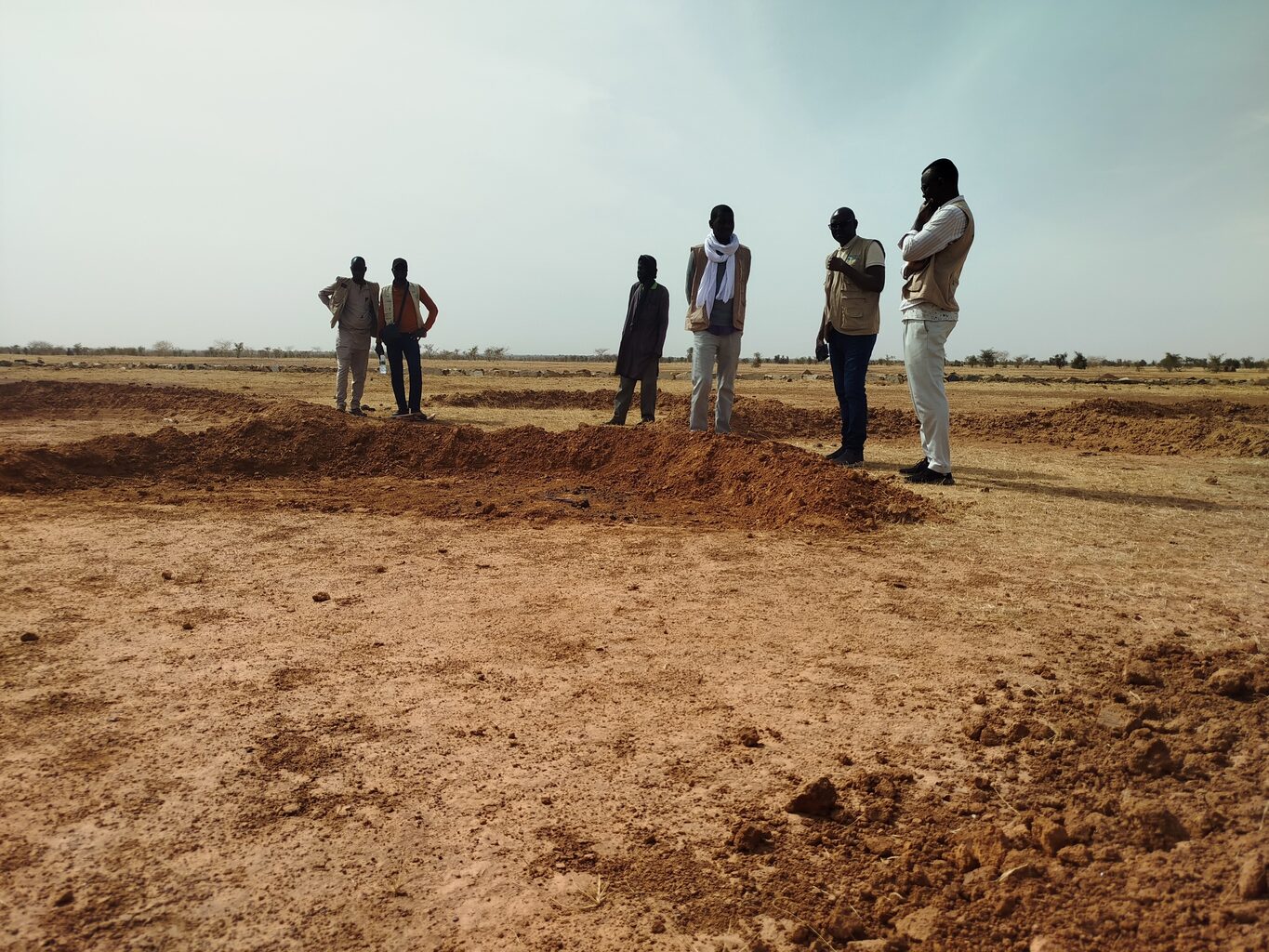
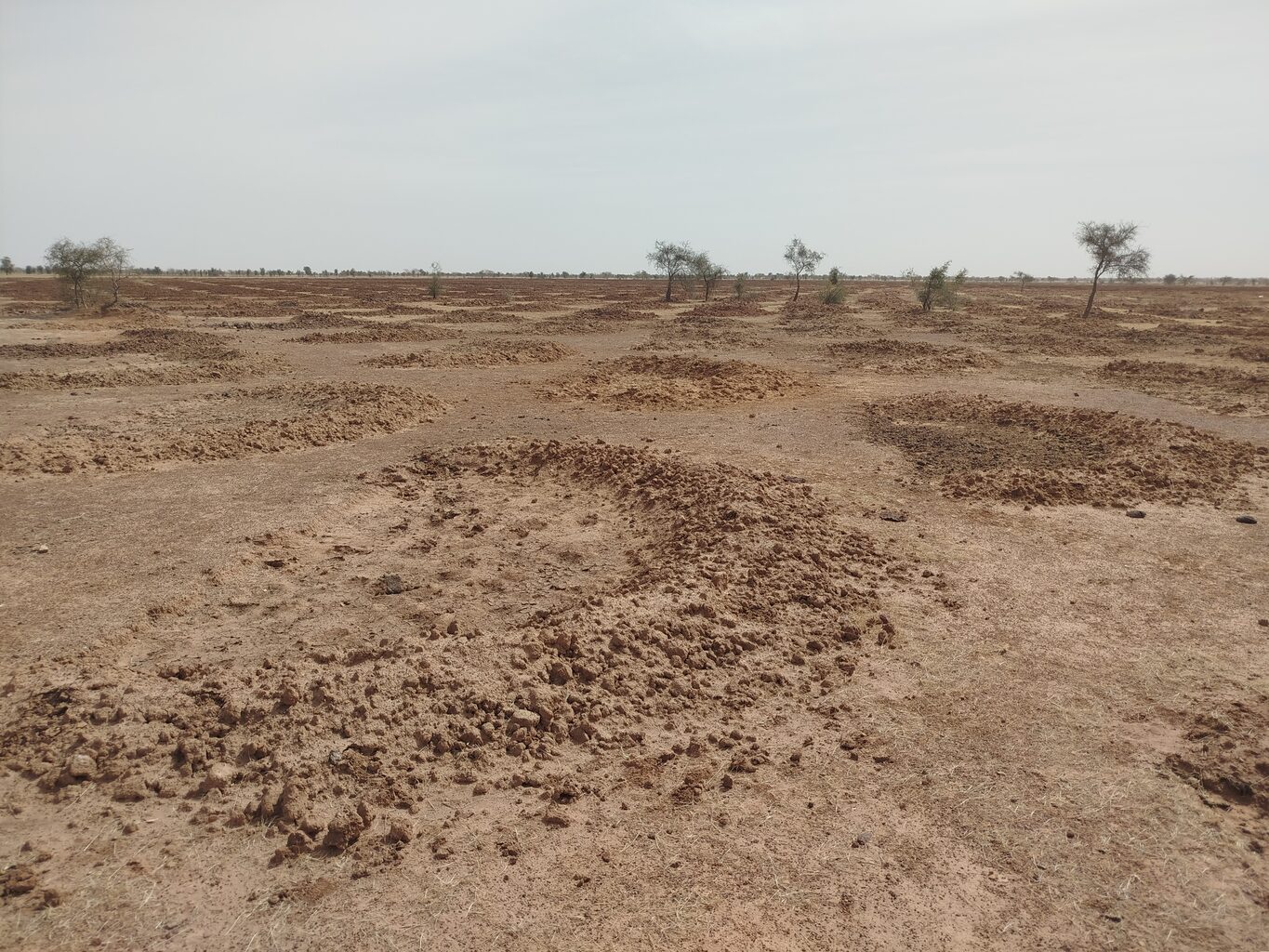
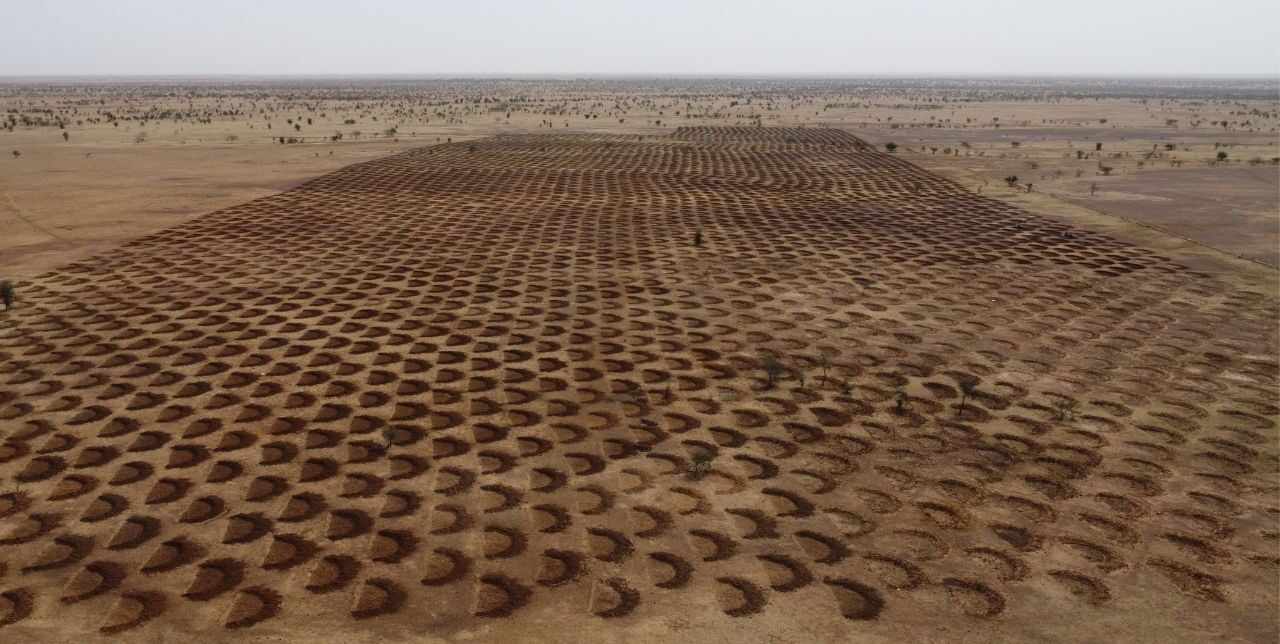
Among the ongoing activities, a key role is played by soil regeneration through the use of agricultural half-moons. Widespread in the Sahel region, the technique involves creating compacted earth structures in semi-circular shape, with a diameter of 2–4 meters and a depth of 20–40 cm, arranged perpendicular to surface water flow and organized in staggered parallel rows. In arid or semi-arid areas like Hodh El Chargui, the half-moons slow the runoff of rainwater, facilitating its infiltration into the soil and retaining sediments and organic matter; subsequently, the edge of the structures protects seedlings from wind and erosion.
A sustainable, cost-effective, and community-driven practice
The half-moon technique is low-cost, easy to implement, and optimizes the use of a resource like rainwater to enrich the soil, improve its fertility, and, in the long term, contribute to land restoration and protection. The success and sustainability of this practice also rely on the strong commitment of local communities to land restoration: the half-moons were in fact built directly by residents of the affected areas, who were paid by the project, with support from COOPI teams. In addition, farmers have been trained in the production of natural fertilizer, made from locally available materials such as ash, brushwood, and manure: a sustainable and economical practice that reduces dependence on external inputs.
70 hectares ready for planting
So far, over 70 hectares of crescent-shaped plots have been completed in the villages of Kendjé, Hassi Leghnam, M’hadyatt, Hassi El Avia and Tichilit Sba. The increase in cultivated land and soil fertility will lead to improved agricultural productivity during the coming season. The main crops planned are cowpeas (500–800 kg/ha), corn (800–1,500 kg/ha), and millet (600–1,200 kg/ha)—staples in the local diet that will help ensure adequate nutrition for the people reached by the project. About half of the harvest will be used for household consumption, while the surplus will be sold in local markets, generating income.
The half-moon structures represent a concrete and replicable response to the needs of communities living in climatically fragile areas exposed to the threat of desertification. A virtuous example of how targeted solutions, tailored to local realities, can contribute to the development of sustainable food systems and improve the nutritional status of the most vulnerable families, generating a lasting impact.
---
COOPI has been operating in Mauritania since 2019, focusing on economic development and support for small-scale productive activities, the promotion of food and nutritional security, the rehabilitation of rural infrastructure, maternal and child health, and the socioeconomic integration of the most vulnerable groups. Through a multisectoral and participatory approach, COOPI aims to strengthen the autonomy of refugees and host communities, prevent conflicts related to natural resource management, promote social cohesion and equal opportunities, and enhance the population’s resilience to the impacts of climate change.