SHARE


 Mauritania
15-06-2026 | di COOPI
Mauritania. Training and local capacity building through the PRODEVELOP project
Strengthening the capacities of local communities is a central element of the project "PRODEVELOP — Promoting local economic development and peace through an inclusive strategy to support the livestock and agricultural sectors in Mauritania, Wilaya de Hodh El Chargui" — funded by the Fondation Facilité Sahel and implemented by COOPI – Cooperazione Internazionale in consortium with the Mauritanian NGOs SOS Désert and AMAPV. Launched in 2022 in the Hodh El Chargui region, in south-eastern Mauritania, the project aims to improve access to agro-pastoral infrastructure and economic opportunities, and to enhance the management of natural resources, with the goal of contributing to peace promotion, conflict prevention and sustainable development in the areas of intervention.
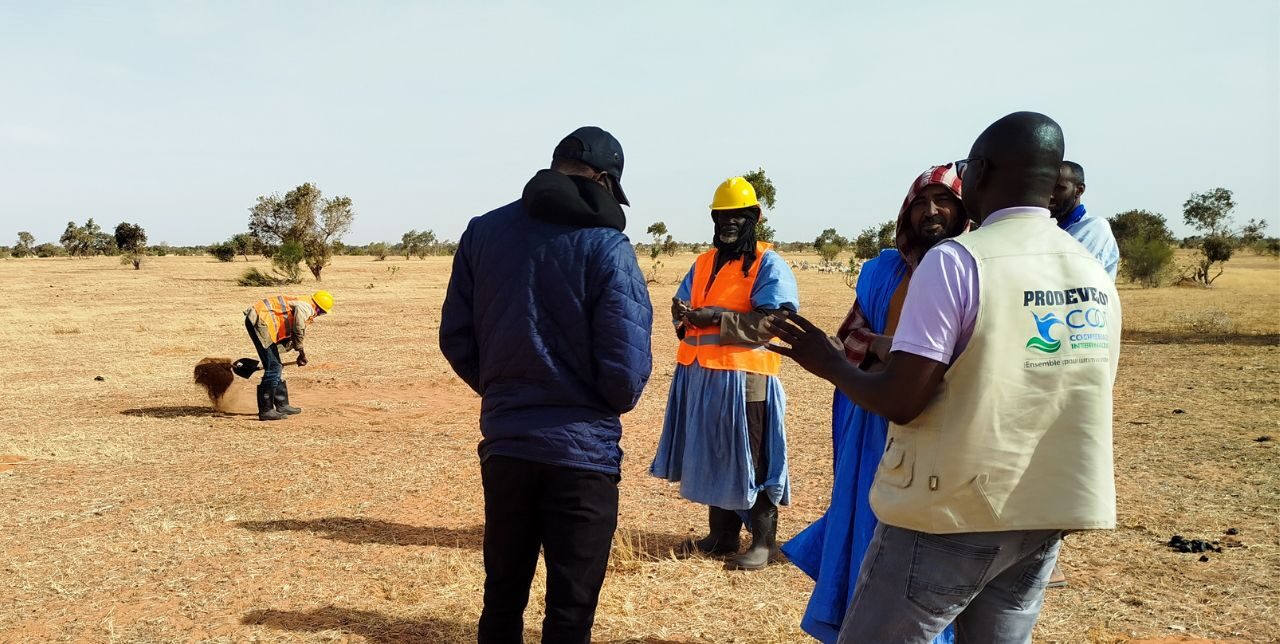
Real and lasting change cannot happen without communities fully taking ownership of a project — and this necessarily involves developing technical, administrative, financial and organisational skills for the future community-based management of infrastructure. Local governance is ensured through the establishment of 24 Management Committees, one for each infrastructure built under the project. Dams, market gardens, veterinary pharmacies and livestock vaccination enclosures are handed over, once completed, to representative bodies elected by the communities themselves, tasked with ensuring their proper functioning and overseeing shared use. To this end, members of the Management Committees — over 75% of whom are women — have taken part in training sessions focused on administrative and financial management and on maintenance techniques specific to each type of infrastructure. Through presentations, group discussions, practical exercises and case studies, participants have deepened their understanding of their roles and responsibilities, acquiring tools to ensure traceability, transparency and sound management of community resources.
Alongside the consolidation of technical and managerial skills, the project aims to strengthen social cohesion and local conflict prevention mechanisms. To this end, 75 community leaders from the three intervention departments (Nema, Amourj, Adel Bagrou) took part in training on conflict management, peace promotion and non-violent communication. Thanks to a participatory and interactive approach that drew on local experiences and knowledge, participants were able to discuss the challenges facing their territory and acquire tools to foster dialogue, positive leadership and shared management of natural resources.
In the areas of intervention, the project has also established 50 Economic Interest Groups (GIEs) — local producer associations — which will receive seed funding to start agro-pastoral activities and contribute to local economic development. Numerous training sessions were delivered to the GIEs during their establishment phase. To date, over 700 people have participated in training on environmental conservation and natural resource protection. The strong turnout — particularly among women — reflects the growing interest of communities in more sustainable and environmentally responsible production practices. Participants addressed issues directly linked to daily life and the productive activities of the GIEs, such as soil conservation, water management and the fight against deforestation. Sessions were accompanied by practical field demonstrations and context-adapted learning materials to facilitate understanding and appropriation of key concepts.
Finally, the project has supported the strengthening of the economic, entrepreneurial and technical capacities of the GIEs, enabling participants to acquire skills specific to the productive sectors in which they operate. Training has improved knowledge in financial management, governance and internal organisation, promoting the diversification and enhancement of economic activities to build resilience and autonomy. Kits containing seeds and other agricultural inputs have been distributed to allow GIEs to quickly apply the techniques learned.
Through this training, the project aims to equip communities with effective tools so that the infrastructure built and the activities launched can generate a positive long-term impact. Investing in skills and supporting local governance are indeed fundamental prerequisites for ensuring inclusive and sustainable economic development.
---
COOPI has been working in Mauritania since 2019, with interventions focused on food security, economic development, rural infrastructure rehabilitation, maternal and child health, and the socioeconomic inclusion of the most vulnerable groups, promoting resilience, social cohesion and shared management of natural resources.